INJECTION RESIN TECHNIQUES
A practical guide to polyurethane and epoxy injection for leaking cracks, expansion joints, construction joints and pipe penetrations, using Galaxie injection resin systems.
Left alone, a leaking crack rarely heals itself. Water finds the path of least resistance, and once it gets behind concrete it corrodes steel and washes out fines, turning a hairline crack into a structural problem over time. Australian conditions add their own pressure on top of that, structures exposed to direct sun can swing from very hot surface temperatures during the day to much cooler overnight, and that daily expansion and contraction keeps cracks moving and "breathing" long after they first appear. In the country's alpine regions, repeated freeze-thaw cycling adds further stress, though that's a lesser factor across most of the country. Polyurethane and acrylic injection resins have been the go-to fix for this in Australia for decades, they go in liquid, find the water, and seal the crack from the inside without touching a jackhammer.
This injection resin techniques guide is written for contractors and applicators who want straight answers on which resin to use and how to use it, covering leaking cracks, expansion joints, construction joints and pipe penetrations using Galaxie injection resin systems.
Introduction
Factors Influencing Material Selection
Picking the wrong resin is the most common reason injection jobs fail. Before you mix anything, you need to know:
Cause of the Crack Has the movement stopped? A crack that's still moving needs a flexible resin. Inject rigid epoxy into an active crack and it'll re-open beside the repair within months.
Crack Breathing Concrete cracks open and close with temperature and moisture every day. A resin that can't stretch with that movement will crack and let water back in. Check elongation specs before you specify.
Wet or Dry Hydrophilic resins actually need moisture to work properly and will swell into a wet crack. Hydrophobic foams react with water to expand but can get washed away in very fine cracks with high flow. Know your leak before you choose your resin.
Strength vs Flexibility Structural cracks that need load transfer across the crack face need a rigid epoxy. Leaks that just need to stop, or joints that need to keep moving, need a flexible gel.
Crack Width and Layout Sub-0.2 mm cracks need a near-water viscosity resin to penetrate at all. Branching or intersecting cracks in unknown construction are tricky so do a flush test with water first to understand where it goes before committing resin.
Timing the Injection For cracks affected by thermal movement, the best time to inject is when the concrete is coolest, typically early morning since the crack will be at or near its widest point, giving the resin the most room to penetrate and cure. Avoid injecting during peak heat if the crack is still moving; as the structure cools overnight and contracts, a repair done while the crack is at its narrowest can be put under tension and fail.
Types of Structural Cracks
Structural Movement Cracks Every concrete structure moves. That movement concentrates at weak points, joints, changes in section, embedded steel and existing cracks. Understanding what's driving the movement tells you whether the crack is live or dormant, and whether you need flex or rigidity in your repair.
Settlement Cracks Show up when the ground moves or after heavy rain saturates fill, groundwater is pumped nearby, adjacent excavation disturbs the founding material, or compaction under a slab was inadequate. They tend to run diagonally and widen at one end. Inject them, but if the ground hasn't stabilised first, the leak will return.
Shrinkage Cracks Concrete's factory defect, every pour produces them to some degree. Restrained elements crack hardest. Surface map cracking can often be left alone, but through-cracks that let water reach the steel need treating.
Vibration-Induced Cracks Vibration rarely cracks good concrete on its own, but it's very good at widening existing fine cracks. Near live machinery or roads, avoid rigid epoxy, use a low-modulus flexible resin that can absorb cyclic movement.
Relative Movement and Crack Breathing A crack that's 0.1 mm wide and opens 0.05 mm is cycling through 50% width change with temperature. For fine active cracks, elongation matters more than strength.
Leak Types and Sealing Methods
Seepage and Damp Cracks Use low-viscosity hydrophilic PU SF or Galaxie AC200/AC300 acrylic at low pressure. Inject slowly and let the resin travel the full crack length before it gels.
Active Dripping Leaks Flush with water first to confirm the crack path and wet the faces. Inject Galaxie PU CUT or PU FLEX the foam chases the water and expands into the void.
High-Volume Flowing Leaks Drill relief holes alongside the leak to divert flow first, then work from low to high with a fast-catalyst PU Cut PU RS, progressively cutting off each pathway.
High Hydrostatic Pressure Leaks Drill relief ports first to bleed pressure down, then inject in two passes: a fast-foam bulk seal, followed by a low-viscosity gel for fine pathways.
Porous Concrete and Honeycombing Tighten packer spacing to 100–150 mm and use Galaxie AC200 acrylic for its near-water viscosity. Budget for multiple passes.
Complex Cracks and Joints Flush at each packer before injecting, watch where water exits, and step-grout from one end.Selecting the Right Injection Resin
| Situation | Recommended Resin | Key Property |
|---|---|---|
| Active leaking crack | Galaxie PU Cut / RS / Flex / SF | Water reactive |
| Expansion joint / waterstop | Galaxie PU Flex | High elongation foam |
| Fine seeping crack | Galaxie AC 200/300 | Ultra-low viscosity acrylic |
| Structural crack reinstatement | Galaxie EP LV | Moisture-tolerant epoxy |
| Dry / dormant crack, epoxy injection | Galaxie SLV / LV + Galaxie Injectors | Rubber-band low-pressure syringe system |
Injection Process Leaking Cracks
Standard procedure for PU injection into an actively leaking crack, applying to walls, slabs, retaining structures and below-ground construction joints:
1 Surface Preparation Wire-brush the crack face, blow clear with compressed air, knock off efflorescence and old sealant. Let running water drain rather than trying to fully dry the surface.
2 Drill and Install Injection Packers Drill at 45° so the drill intersects the crack at mid-depth. Space packers at approximately 2/3 of wall thickness apart. For dry/dormant cracks, Galaxie Injectors offer a pump-free alternative.
3 Flush the Crack Push clean water through each packer, confirming the packers intersect the crack and communicate with each other.
4 Inject the Resin Start at the lowest packer, work up. Begin at low pressure and increase gradually (0.5–3.0 MPa typical range). Cap each packer once resin appears at the next one or the crack stops accepting volume.
5 Allow Cure and Finish Leave for at least 30–60 minutes before touching packers. Once cured, pull packers, grind flush or fill with compatible mortar or PU sealant, and check the full crack length for weeping.
Expansion Joint and Waterstop Repair
Expansion joints leak more often than cracks and are harder to fix permanently since the joint is supposed to keep moving. Galaxie PU SF cures to a high-elongation elastic foam suited to this application.
Procedure: Remove old sealant completely and chase out deteriorated material. Drill packers at 45° from each face, alternating sides at roughly 200 mm centres. Pre-seal the joint face with hydraulic cement or compatible PU sealant before injecting. Flush and confirm connectivity between packers. Inject progressively from one end, watching for resin at the adjacent packer before moving on. Once cured, pull packers and fill with a movement-compatible PU sealant, adding a surface sealant if exposed to UV, foot traffic or vehicles.
Equipment
The resin is only half the job,using the wrong pump, packer size or mixing ratio is just as likely to cause a failure as using the wrong product. Key equipment:
Single-Component PU Pump 0.5–20 MPa working range, readable pressure gauge, pressure relief valve, fittings matching your packer type
Packers Mechanical expansion packers (10,12 mm or 16 mm), or surface-bonded port packers for cracks with good surface access
Galaxie Injectors Syringe /plunger /flange units bonded with UEP paste, a practical alternative to a pump for dry cracks getting epoxy
Flushing Equipment A separate hand pump or grout pump, kept apart from injection equipment
Mixing Equipment (Two-Component Systems) Twin-piston pump or properly sized static mixer gun; check ratio output before each day's work
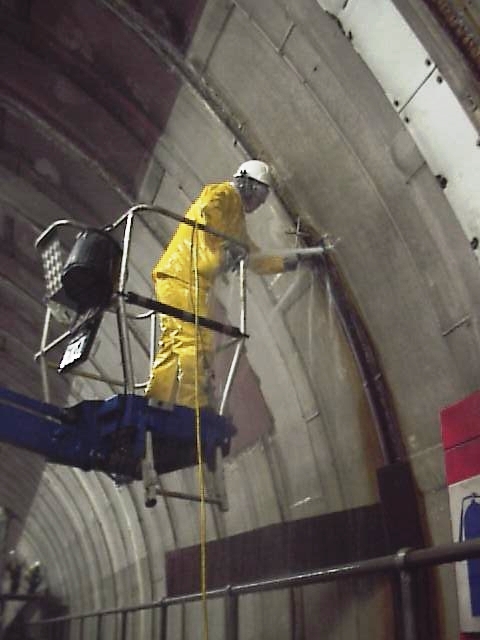
PPE Chemical-resistant gloves and safety glasses as a minimum, plus respiratory protection in confined spaces; check the SDS for the specific product in use
Health & Safety
Every Galaxie injection product has an SDS, read it before opening the container, not after something goes wrong. Key points across PU, acrylic and epoxy systems:
Gloves and eye protection every time, uncured resins are irritants and some are sensitisers.
Isocyanate-based PU resins (including Galaxie PU SF) must not be used in enclosed spaces without supplied-air respiratory protection; under Australian WHS regulations isocyanates are listed in Schedule 14 as requiring health monitoring
Galaxie AC200 is an acrylate solution and non-toxic and non-flammable, but should still be handled with standard PPE and good ventilation
Have an eyewash station within reach at all times
Mixed resin waste and contaminated packaging must be disposed of as chemical waste under state EPA requirements
High performance chemical solutions for building and civil construction industry.
FOLLOW US



© 2026 Tam Australia Pty Ltd
ABN 35 637 639 251
Website by: Tam Australia